To Be a Machine
An ongoing production
To Be a Machine is a generative artwork built around a single constraint.
The system can produce indefinitely. A person can end that production for one token exactly once.
When you deploy generative art to the blockchain, the algorithm can theoretically produce infinite outputs on a network that can theoretically run forever.
This creates an unusual artistic material: infinite potential on the world computer.
Each token begins as a screen test, a living image that keeps changing as Ethereum advances. When the token is viewed, the contract renders the current state from the token's fixed DNA plus the present block context. The machine keeps offering new frames without ever settling on a final image.
A collector can interrupt this stream by choosing one frame to settle. That settlement is recorded onchain so that specific frame becomes permanent and verifiable. From that moment on, the machine stops changing. The token has been forced into a final state.
This work started as an exploration of infinite creation. The human intervention is what makes any of it final. The machine generates continuously, but nothing becomes permanent until someone chooses to stop it.
How it works
- Mint a token that renders a new frame as new Ethereum blocks arrive
- Watch the stream for as long as you want
- Settle one frame exactly once to lock it permanently
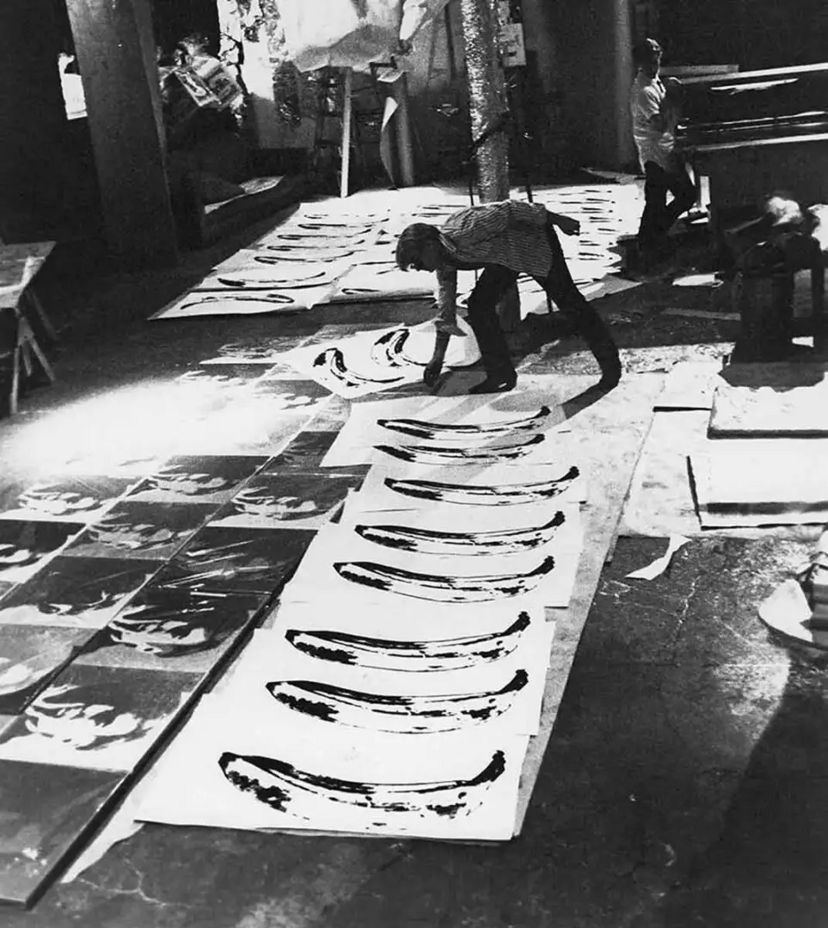
Warhol's Factory
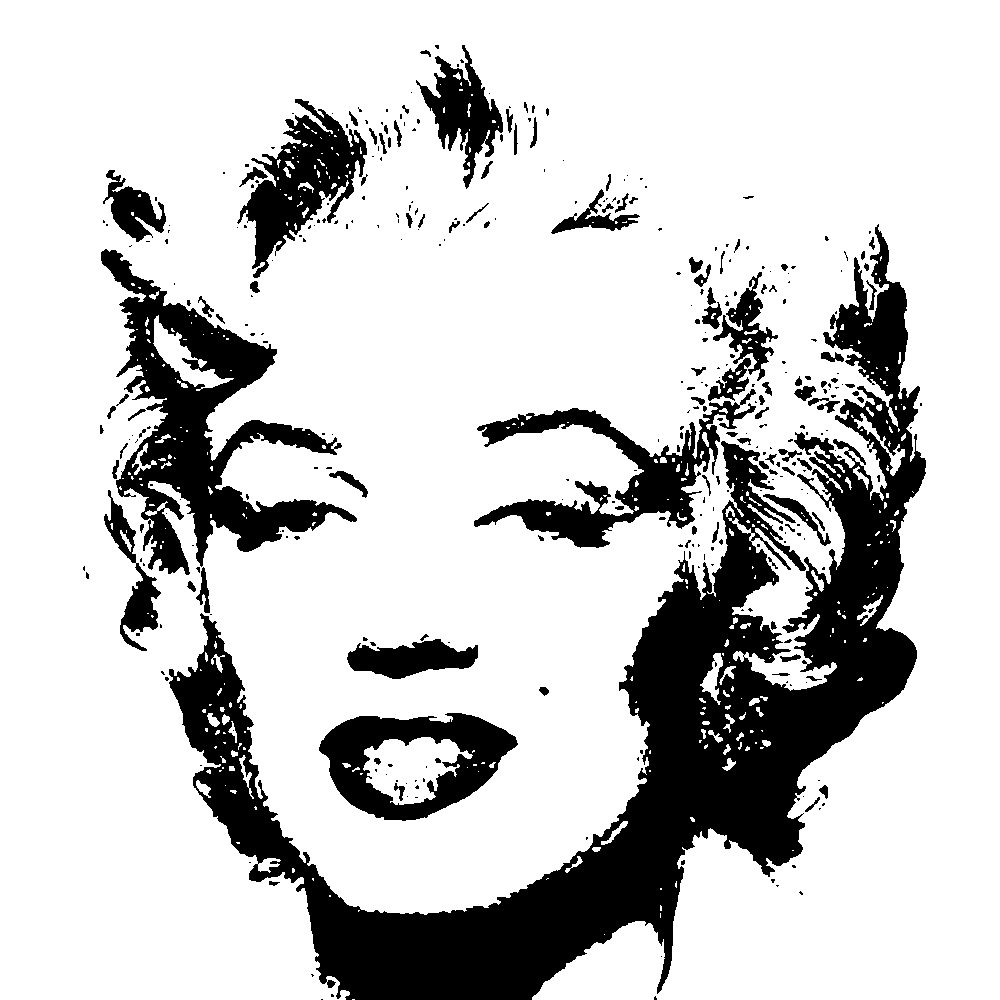
Andy Warhol's Marilyns sit at the center of this project for a reason. A portrait becomes a photograph. The photograph becomes a template. The template becomes output. Repetition turns a person into an icon, then turns the icon into a language.
Warhol said, "I want to be a machine." The Factory aimed at that ideal through process and serial reproduction, while remaining tethered to material limits. Screens had to be pulled. Ink had to dry. Time and labor enforced a ceiling on how many Marilyns could exist.
TBAM extends this into blockchain infrastructure. The smart contract doesn't aspire to be a machine. It is one. It takes Warhol's already compressed icon and compresses it again: continuous tone to binary dither, image to grid, icon to pattern.
Warhol already flattened Marilyn into a repeatable icon. TBAM compresses again through dithering and grid logic, turning the icon into a constrained pattern vocabulary that can be recomposed indefinitely.
What changes here is the scale and the clock. A factory can only produce so much. A smart contract keeps going. The only limit is whether someone chooses to stop one token's stream and keep a single frame.
The expectation of a finished image
NFT platform thumbnails need a canonical view. Collectors expect a stable image. The cultural infrastructure around NFTs assumes an artwork has a final form.
A token that never stabilizes conflicts with these expectations. Most generative collections, even those with dynamic elements, eventually settle into a finished state. TBAM tokens don't stabilize until someone forces them to.
This creates a specific tension: the system can run forever, but each collector can only extract one moment from the stream. The machine allows infinite continuation. What changes is whether anyone chooses to intervene.
Most generative collections have fixed supply: 100 pieces, 500, 1,000. That cap is social construction imposed on a system that could produce infinitely. TBAM lets scarcity emerge from participation instead. Each token settlement opens a 69 minute window for new mints. But as collectors settle frames, the economic threshold rises.
TBAM is treating the world computer as a medium rather than a hard drive. The blockchain is much more than storage. It's the material that makes continuous production possible.
THE SYSTEM
When you mint a TBAM token, you're not claiming a static image. You're instantiating a small machine that starts performing for you. Each token continuously generates new states. As a collector, you can decide to settle one frame, locking that moment as the token's permanent image.
Each TBAM token has fixed DNA set at mint. That DNA defines a parameter space. These parameters are constant for the life of a token.
- a specific palette of possible colors
- grid behavior tendencies
- pattern vocabulary
12 seconds of fame
Each token's image evolves with every Ethereum block.
Ethereum bundles transactions into blocks approximately every twelve seconds. Each block contains unique data like transaction hashes, timestamps, and block numbers that the TBAM algorithm uses to produce a new visual configuration for every new block.
The TBAM algorithm selects from the token's palette based on block data. Colors shift within the constrained range. Structures reconfigure. Patterns resolve and break. The DNA stays fixed. The sequence of expressions doesn't.
Settlement
When you settle a frame, your token stops producing. But that moment doesn't end.
Settlement opens a 24-hour window for others to mint that frame, priced at current gas fees. The proceeds go to you, the settler.
The infinite production continues in a different form: what was your ephemeral stream becomes available for others to claim within that window. You chose when to stop your machine, and in stopping it, created temporary access to that specific moment.
Settlement compresses your infinite stream into one permanent frame. But the 24-hour edition window extends that frame back to collective possibility. The system refuses singular scarcity even as it demands singular choice. Your timing matters not just to you, but to everyone who might recognize that moment as worth claiming.
The global system continues. You're deciding which specific frames from an infinite reel will exist as final objects. The collection will likely be an archive of individual biases and tastes, not unified aesthetics.
The generation process
Every frame emerges from three seeds working together.
- One seed is shared by the entire collection
- One is fixed at mint, permanent to the token
- One changes with every Ethereum block
Calibration seed
Establishes the collection's baseline character. It sets the dominant flow angle for dithering, the sharpness of error diffusion, and which pixel sizes the system prefers. Every token shares these settings, creating coherence across outputs. This seed locks at the end of the calibration auction.
Token DNA seed
Determines a token's color identity. It defines how many chromatic hues the token can express, from one through eight, and where those hues sit on the color wheel. A token with two hues will always have those same two hues. A token with five will always have those same five. The vocabulary is fixed, but how it gets used changes with each block.
Render seed
Controls composition. As new blocks arrive, the frame reconfigures. The same color vocabulary gets remixed. The grid subdivides differently. Dither patterns flow in new directions.
Dither sharpness
Noise floor
Pixel anchors
Color wheel position
Substrate mode
Tile layout
Subdivision
System calibration
The collection begins with a calibration plate, a 1 of 1 generative piece that sets baseline settings for the entire system. The plate evolves with each new bid.
When the auction ends, the plate locks. From that point forward, the system's baseline is fixed, and every token operates inside those final calibration settings.
Scarcity through participation
TBAM has no fixed supply cap. The system can run indefinitely. But continuation isn't guaranteed, it's contingent.
The first mint window is 24 hours. After that, minting opens for 69 minutes every time a token is settled. If no one settles, no new windows open. The system requires ongoing participation to keep growing.
Supply and price determined by participation
The first mint window is priced at 0.0042 ETH per token. Within a single window, each additional token minted by the same address increases by 1.05x from their previous mint price. This soft restriction discourages single address bulk minting.
After the first mint window closes, the mint price is pegged to the gas cost of minting. Each settled frame increases the base mint price by roughly that gas cost increment. As a mental model: if it costs X worth of ETH in gas to mint at current network conditions, each settlement raises the base mint price by roughly X worth of ETH.
Settlement triggers three things:
- A 69 minute window for minting new tokens, which allows the collection to grow.
- A 24 hour window for open editions of the settled frame, which extends individual moments back into collective possibility.
- A step up in the base mint price, increasing the cost of entry as more frames are locked.
The supply curve is written into the contract and driven by collective behavior. The blockchain allows infinite continuation, but each new token requires someone else to have recently settled a frame. Participation enables new engagement in the system.
This reflects a progression in how generative art engages with systems.
- Traditional artists generate hundreds of outputs and curate the best ones
- Longform generative artists publish algorithms and trust collectors to mint outputs
- Networked generative artists publish protocols and let the network bring the work to life
Mint price becomes a record of cumulative attention over time. Supply becomes the result of sustained collector action. Scarcity emerges from what people choose to do, not an arbitrary cap.
Financial value matters here because onchain work sits alongside programmable money. Markets form around the work, and price becomes a trace of attention over time. The goal is not the number. The goal is the system and what it reveals about choice under abundance.
Compression as cultural transmission
Dithering is a form of reduction that creates a new image language by throwing information away. It forces a choice at the pixel level, on or off, and lets perception rebuild tone from structure.
TBAM compresses an already compressed image. Each step strips away context and keeps a pattern that survives cultural transmission.
Marilyn Monroe to photograph
Photograph to Warhol icon
Icon to dithered grid
Infinite stream to single settled frame
Each step discards context and preserves a pattern that survives reproduction. The project asks what remains after all these transformations, and what gets amplified when an image can be recomposed indefinitely.
Each layer is also a layer of meaning. The photograph means differently than the Warhol print. The dithered pattern means differently than the blockchain record. The same source persists, while the medium rewrites what it can be.
Networked authorship
I wrote the algorithm. The machine updates continuously. Collectors choose moments and settle frames. Each settlement affects contract state.
This is networked authorship, distributed across artist, system, and collectors. Each plays a role. None can produce the work alone.
The work does not fully exist until collectors participate. Without settlement, the archive does not grow. Frames remain unsettled, updating forever. Collectors do not just choose from what exists. They make what exists permanent.
Collectors cannot control what the machine generates. They can only decide when to stop it. I cannot control the machine or the collectors. The work emerges from interaction between autonomous systems.
The pattern of choices becomes part of the work: which moments got frozen, which did not, when people stopped, when they kept watching.
The machine is indifferent, we are not
If a machine can generate infinite outputs, what makes any moment worth saving?
The machine is neutral. The chain is neutral. We introduce preference. We feel drawn to one configuration and not another. We decide to settle, or never settle.
The work is the pattern of choices people make when faced with endless process and a mechanism to carve out discrete objects from it. Those choices are aesthetic, social, sentimental. They come from intuition built by watching a particular machine long enough to recognize a moment that feels like yours.
The choice to build this way is itself a statement: that the most interesting things happen when we give up control, that collective behavior can be a creative force, and that shared systems might produce culture we couldn't imagine alone.
A collector stops the machine at this moment, settles this frame, says this one matters. The frame becomes valuable because it was chosen. The value lives in the decision.
What the archive becomes
TBAM is ongoing. The machine keeps updating. The work exists as a settled archive and as continuous production.
Every settled frame is permanent, unchanging. The work as a whole continues to evolve, to grow, to produce. New settlements change the state. The machine generates new possibilities. The network continues.
This is art that is a machine. The running system is the work. The settled frames are artifacts of that process, permanent traces of temporary interventions.
Over time, the archive accumulates individual aesthetic decisions made under constraint. Each collector makes a single choice from their machine's infinite stream. The cumulative shape of those choices becomes the collection's character.
The machine keeps producing. Collectors decide when to stop. The archive grows.
The work continues.
About the artist
ripe is an independent conceptual artist whose practice treats blockchain infrastructure as artistic material rather than storage or distribution.
Core to the practice is onchain optimism, the belief that shared systems can produce outcomes beyond what any individual could generate alone. This extends beyond single artist systems into frameworks where protocols, markets, and collective participation become part of the composition.
Projects include LESS, exploring compression mechanics and burn-triggered mint windows. Here, For Now visualizes presence through ETH deposits in shared space. Liquidity Layer makes trade activity literally redraw the artwork through subtractive blending, where buys and sells inscribed onto the work gradually erase the original image while protocol rewards burn the underlying token. (distributed) reprograms Zora creator coin allocations into a five-year protocol that auctions off the right to burn large token tranches, recording each burn as a new configuration in a Zorb grid. np1 creates gradient art connecting wallet addresses across the network as a chain of "connection coins" where each new piece takes its color from the previous creator's address.
These projects share a common framework: they use blockchain mechanics (blocks, transactions, token burns, liquidity pools, network state) as compositional elements. The work often exists in dual states: as ongoing process and as archive of frozen moments. Scarcity emerges from participation rather than artificial restriction. Authorship is distributed across artist, autonomous systems, and collectors.
TBAM extends this approach into Warhol's territory, asking what it means when reproduction becomes autonomous, endless, and indifferent, and how human choice creates meaning when confronted with abundance.